


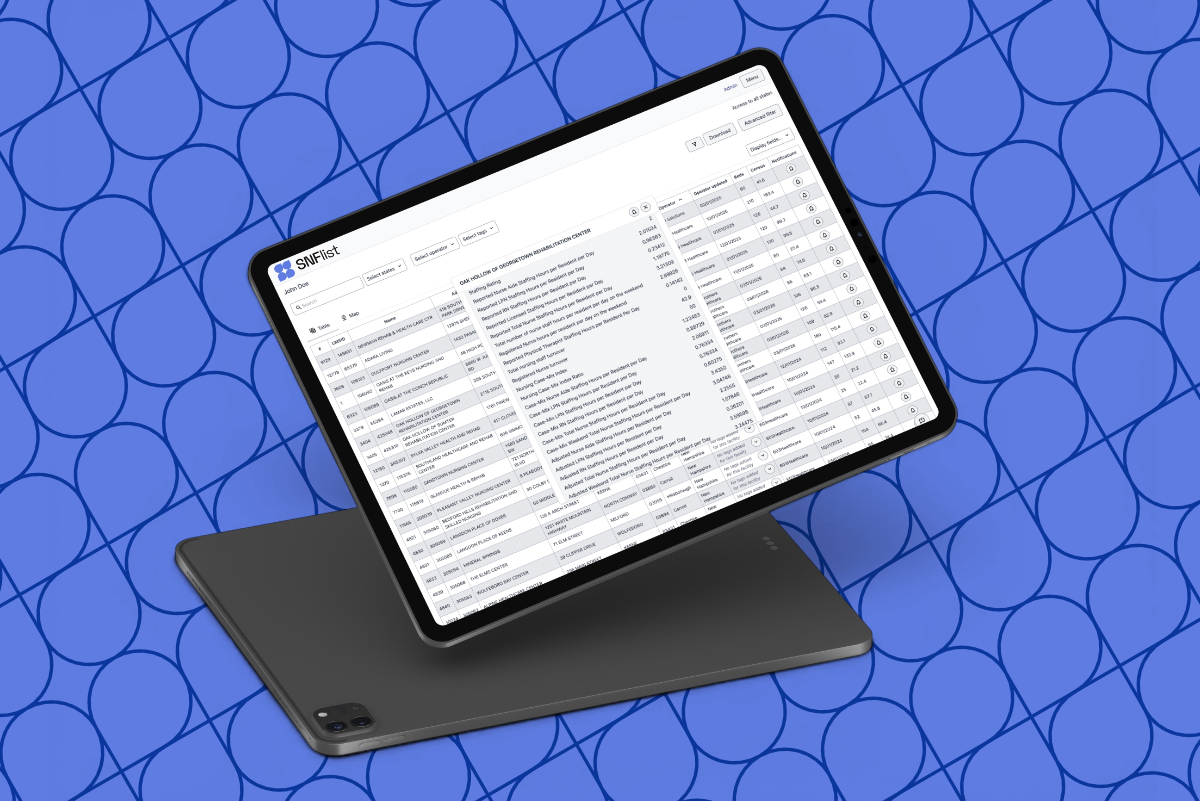

Where SNF Staffing Data Comes From
CMS collects staffing data from every Medicare and Medicaid certified skilled nursing facility through the Payroll-Based Journal (PBJ) system. Facilities are required to submit actual payroll data quarterly, broken down by employee type and hours worked. This replaced self-reported staffing data in 2016 and dramatically improved accuracy.
The result is a publicly available, facility-level dataset updated quarterly that covers:
- RN hours per resident per day
- LPN/LVN hours per resident per day
- CNA hours per resident per day
- Total nurse staffing hours per resident per day
- Administrator and director of nursing turnover rates
- Staff turnover rates overall
What High Turnover Actually Signals
CMS now publishes staff turnover rates alongside raw staffing hours, and this data is arguably more revealing than the hours alone. High turnover — particularly at the administrator or director of nursing level — is one of the strongest predictors of operational instability in a facility.
When an administrator turns over, vendor relationships often reset. Contracts get renegotiated. Preferred suppliers lose their status. New administrators bring in their own preferred partners. For vendors, high administrator turnover is both a risk signal for existing relationships and an opportunity signal for new ones.
Reading Staffing Hours as an Operational Signal
Beyond the CMS threshold question, staffing hours tell a story about how a facility is positioned in the market:
- Facilities consistently above average on staffing hours tend to prioritize quality, are more likely to accept complex patients, and often command higher reimbursement rates through value-based arrangements.
- Facilities hovering just above the minimum threshold are operating lean — often under margin pressure — and are more cost-sensitive in their vendor decisions.
- Facilities below the minimum are in active compliance risk, creating urgency across multiple vendor categories simultaneously.
Staffing Data by Facility Type and Ownership
Staffing patterns vary significantly by ownership type. For-profit facilities, on average, staff at lower levels than non-profit and government-owned facilities. Private equity-backed operators have faced particular scrutiny for staffing levels following acquisition.
This matters for vendors because ownership type and staffing philosophy are correlated. Understanding an operator's approach to staffing across their portfolio helps predict both the type of solution they'll be receptive to and the price sensitivity they'll bring to the conversation.
How to Use Staffing Data in Your Sales Process
The most effective applications of staffing data in a commercial context:
- Lead prioritization — Filter your target list by staffing sub-rating and HPRD to surface the highest-need facilities first.
- Pitch personalization — Walk into a conversation already knowing the facility's staffing profile. It signals credibility and shortens the discovery phase.
- Account monitoring — Track staffing trends at existing accounts to get ahead of churn risk or expansion opportunities before they surface in a renewal conversation.
- Portfolio analysis — For operators with multiple facilities, staffing data lets you identify which sites in the portfolio have the greatest need — and build a multi-site proposal accordingly.